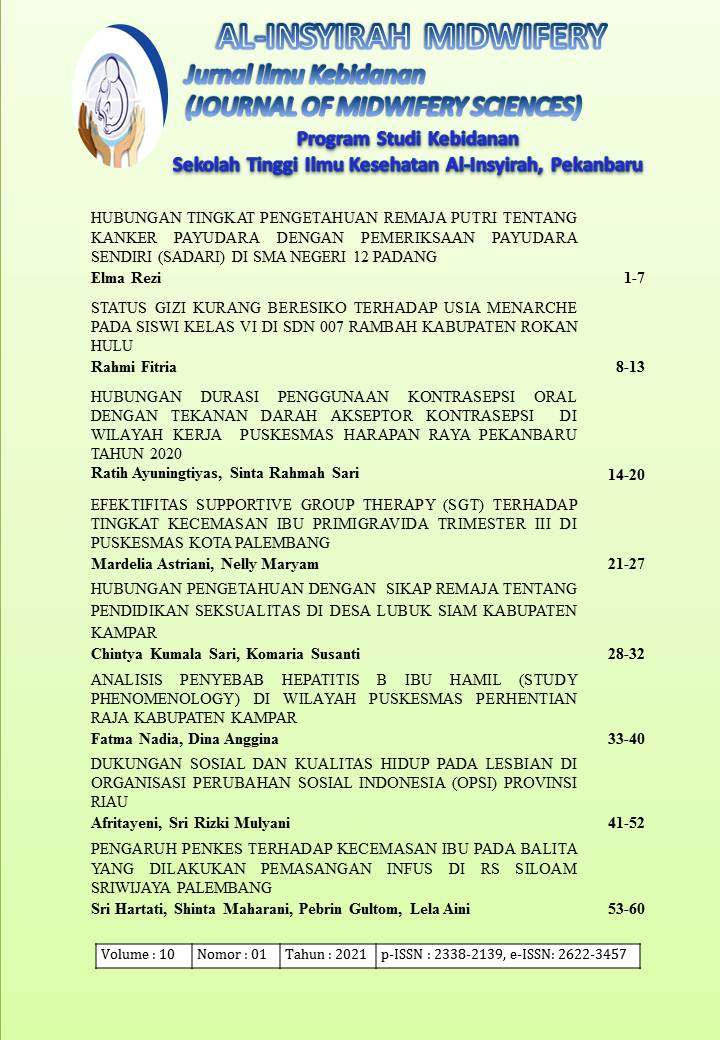
EFEKTIFITAS SUPPORTIVE GROUP THERAPY (SGT) TERHADAP TINGKAT KECEMASAN IBU PRIMIGRAVIDA TRIMESTER III DI PUSKESMAS KOTA PALEMBANG
DOI:
https://doi.org/10.35328/kebidanan.v10i1.1522Keywords:
SGT, Tingkat Kecemasan, Primigravida, Trimester IIIAbstract
Primigravidas who are pregnant for the first time tend to experience anxiety during their pregnancy, especially in the third trimester. Worries in pregnant women if not handled properly will have an impact on the physical and psychological condition, both on the mother and the fetus. In the guidelines for the implementation of antenatal care (ANC) pregnancy examinations by the Ministry of Health in the third trimester, one of which is the presence of a talk session or counseling. The implementation is not yet optimal, so that additional counseling is required in groups and on an ongoing basis. One of them is Supportive Group Therapy (SGT). The purpose of this therapy is to reduce the level of anxiety in primigravida TM III pregnant women. Data analysis used Quasy Experiment with nonequivalent control group design. The research sample was taken by purposive sampling. The sample size of 26 primigravida pregnant women on third trimester was divided into 2 groups, the intervention group and the control group. The results showed that the p-value on the intervention group was <0.005, namely the provision of standard pregnancy examinations plus SGT was effective in reducing anxiety levels primigravida pregnant women on third trimester. SGT is highly recommended to be carried out continuously and sustainably.
Downloads
References
 New Template artikel